Anna Werner · 6 October 2026
Examining Modular Cable Configurations for Optimizing Performance in Distributed Energy Resource Monitoring Systems
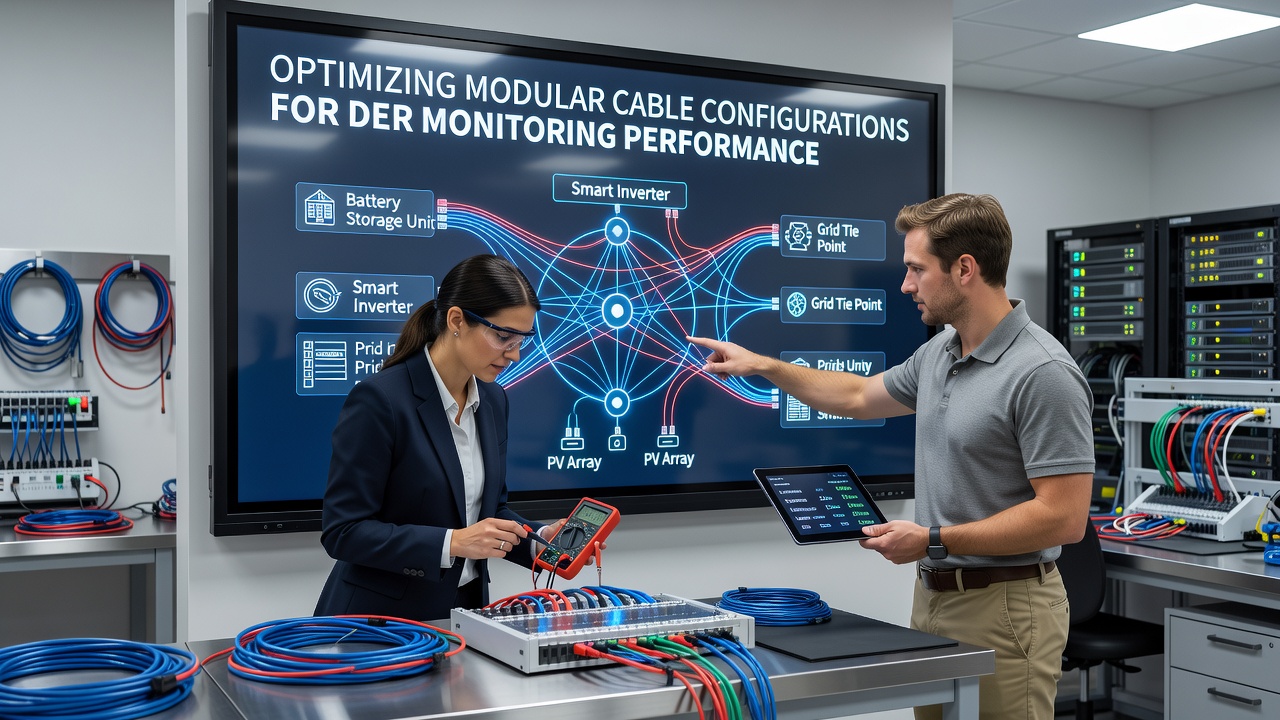
Distributed energy resource monitoring systems rely on precise data transmission between sensors, inverters, meters, and central controllers, and modular cable configurations play a central role in maintaining that flow. These setups combine standardized connectors with flexible cable segments that allow technicians to scale networks without rewiring entire sites, which matters when solar arrays, wind turbines, and battery storage units sit at varying distances from the monitoring hub. Research from the U.S. Department of Energy shows that mismatched cable topologies often increase latency and signal loss in multi-site installations, while properly selected modular arrangements reduce those issues across both urban rooftops and remote rural feeders.
Core Components of Modular Cable Systems
Modular cables in this context typically feature RJ45, M12, or specialized power-over-Ethernet connectors paired with twisted-pair or fiber-optic conductors rated for outdoor and industrial environments. Observers note that the key advantage lies in the ability to swap segments or add extension modules when a new DER unit comes online, without disrupting existing data paths. Studies conducted by national laboratories indicate that cable shielding options, such as foil or braid layers, directly affect electromagnetic interference resistance when inverters operate near high-voltage lines, and configuration choices determine how well that shielding performs under load.
Technicians often select between star, daisy-chain, and hybrid topologies depending on site layout and communication protocol requirements. Star configurations route each sensor directly to a central switch, which simplifies fault isolation but consumes more cable length, whereas daisy-chain arrangements link devices sequentially to conserve materials yet require careful termination to prevent cumulative signal degradation. Data from field deployments across North American microgrids reveal that hybrid approaches, which combine short daisy chains with localized star clusters, frequently deliver the best balance of cost and reliability when monitoring hundreds of points across several acres.
Performance Factors in Real-World Deployments
Signal integrity remains the primary metric for these systems, and modular configurations influence attenuation, crosstalk, and grounding integrity. Researchers have measured that Category 6A or higher Ethernet cables maintain gigabit speeds over 100-meter runs in DER environments, provided the modular connectors maintain consistent impedance at each junction. In October 2026, revised IEEE 1547.1 test procedures for DER interconnection are set to emphasize cable performance verification, prompting operators to audit existing modular setups against updated interoperability benchmarks.
Power delivery over the same cables adds another layer of consideration, because many monitoring nodes draw low-voltage DC from PoE switches or dedicated power conductors. Experts tracking installations in Australian distribution networks report that separating data and power pairs within modular assemblies reduces voltage drop and heat buildup, especially when ambient temperatures exceed 40 degrees Celsius during summer peaks. Grounding schemes also vary by configuration, with some operators preferring isolated grounds per segment while others tie everything to a single reference point to minimize ground loops that distort sensor readings.
Testing and Validation Approaches
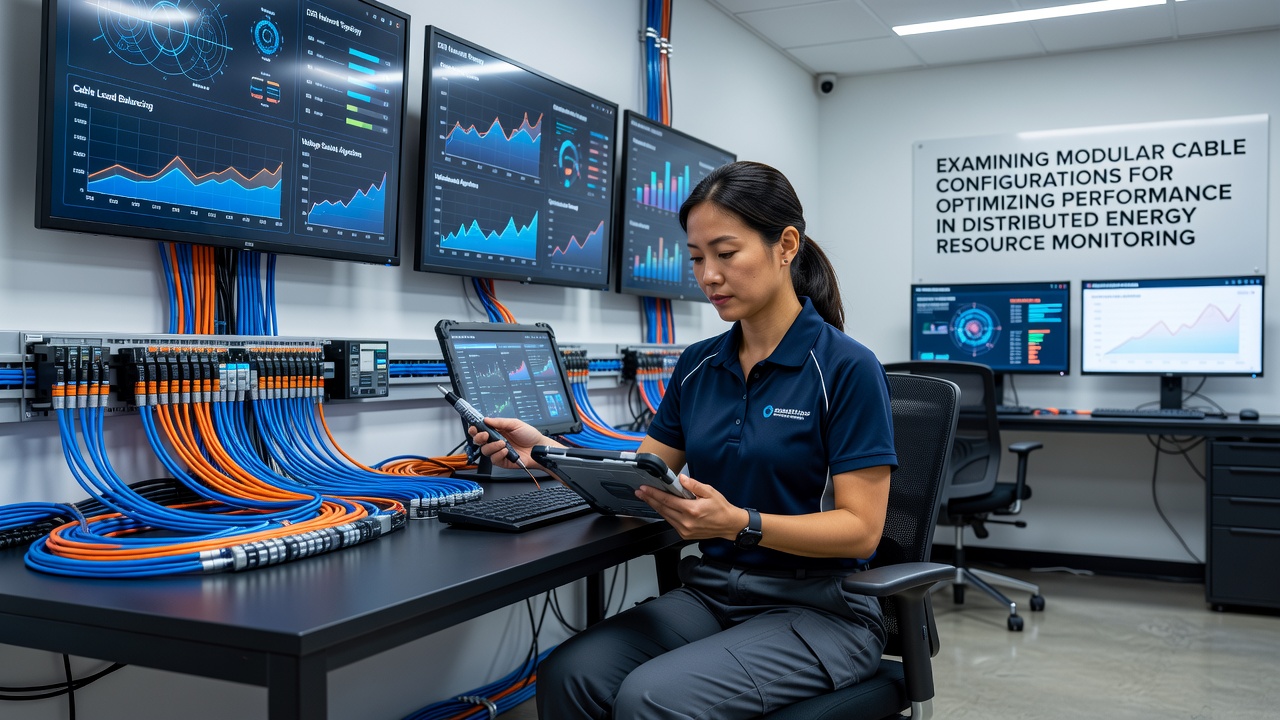
Validation begins with continuity checks and moves to time-domain reflectometry to locate impedance mismatches at modular joints. Organizations such as the International Energy Agency have documented that routine insertion-loss measurements catch connector wear before it escalates into data packet loss across DER fleets. Automated test equipment now integrates with monitoring software so that anomalies trigger alerts without requiring on-site visits, and case studies from Canadian utilities demonstrate that this approach cut unplanned downtime by measurable margins during multi-year observation periods.
Environmental factors receive equal attention during configuration planning. UV-resistant jackets, gel-filled connectors, and rodent-proof armor become standard when cables run above ground or through conduit in agricultural DER sites. Observers following European grid modernization projects note that modular systems designed with IP67-rated components maintain performance after repeated thermal cycling and moisture exposure, whereas lower-rated assemblies require more frequent segment replacement.
Emerging Standards and Integration Trends
Industry groups continue to refine specifications that govern modular cable use in DER contexts, and interoperability testing now includes plug-and-play verification for new connector types. Reports from research institutions in Japan highlight successful trials of fiber-optic modular links that extend monitoring reach beyond copper limits while preserving the same connector form factor, which simplifies technician training. Those evaluations also track how configuration changes affect cybersecurity, because each added modular point represents a potential access vector that requires secure authentication at the physical layer.
Conclusion
Modular cable configurations continue to shape the scalability and reliability of distributed energy resource monitoring, with topology choices, shielding methods, and connector standards directly tied to measurable performance outcomes. As October 2026 approaches and updated interconnection procedures take effect, operators examining their existing arrangements have clear data points to guide incremental upgrades. Field measurements, laboratory validations, and cross-regional deployment records together provide the factual basis for selecting and maintaining these systems in expanding DER networks.